Train with Purpose. Play with Confidence.

Build your game through purposeful practice, clear decisions, and support for the players beside you. STARLIGHT FOOTBALL ACADEMY celebrates women’s soccer with a simple focus: develop skills you can trust, compete with confidence, and respect the game. Explore the training topics and bring one useful idea to your next session.

Read the Game. Support the Next Pass.

Look early, find your angle, and help the next player keep the move alive. A simple pass can change the game when teammates understand one another. Explore how awareness and supporting movement turn individual effort into connected football. Compete for possession with control, patience, and respect for your opponents.

Celebrate the Effort Behind Every Team Moment.

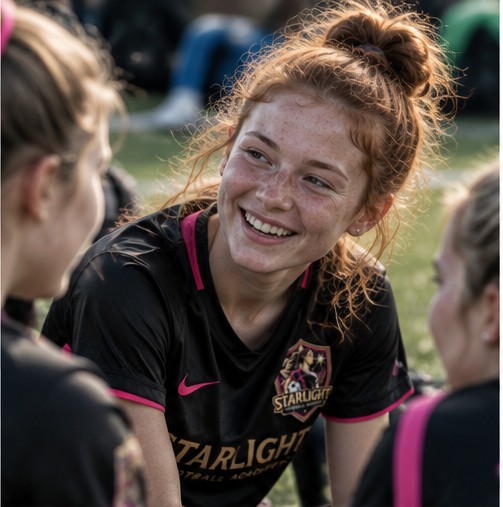
The celebration belongs to every player who helped the team move forward. Recognize the supporting run, the recovery effort, and the encouraging word after a mistake. Enjoy pursuing a result together while honoring the opposition. Shared ambition feels strongest when every teammate can see how her contribution matters.

Small Touches. Stronger Ball Control.

Keep the ball within reach, lift your eyes between touches, and give your next action a purpose. Close control grows through patient practice and useful adjustments. Try a manageable pace before adding pressure, enjoy the challenge of learning, and carry that confidence into the game with your teammates.

01 / BUILD YOUR GAME

Football skills worth
working for.

Women’s soccer rewards skill, awareness, and the willingness to work for one another. These training notes explore three connected habits: receiving with control, reading available space, and providing support after you pass. Each habit becomes more useful when it fits the situation on the field. You may have room to turn, or you may need to protect possession while a teammate adjusts her position. Look for the information that helps you decide. A useful session gives you chances to try, notice the result, and make a clear adjustment. Enjoy the challenge of learning something specific, and recognize the effort of the players who make your own practice possible. You can explore these habits individually, but watch how quickly they overlap in a small game. A player looks up, receives into space, and finds support with her next pass. That sequence gives technique a reason and teamwork a visible shape. Choose the detail that feels most useful to you.

01BALL CONTROL

Build a Reliable First Touch.

Begin with a partner and a comfortable passing distance. Before the ball arrives, glance up and decide where your next touch should take you. Receive with a relaxed surface and guide the ball toward a place where you can play again. If the pass is firmer than expected, adjust your body instead of forcing the same movement every time. Ask your partner to vary the angle so the exercise stays connected to football decisions. Notice whether you can look up after receiving without losing control. A good first touch is useful because it prepares your next action. Finish the practice by naming one adjustment that helped, then carry that detail into a small game where the available space keeps changing. Try comparing two receiving directions during the activity. Which one leaves the next pass visible? Which one asks you to turn back toward pressure? Discuss the difference without searching for a universal answer. The space, the opponent, and your teammate’s movement can all change what makes a touch useful.

Visit the training room
02FOOTBALL TACTICS

Find an Open Teammate. Make an Accurate Pass.

Useful passing lanes on the football pitch are easier to find when you look before receiving. While the ball travels between teammates, look at the defender’s position and the area beyond her. Are you standing behind an opponent, or could two steps sideways reveal a passing lane? Start by moving enough to become visible to the player with the ball. Then check that your movement still supports the team’s shape. Running farther is not automatically more useful. A patient adjustment can give the passer a clearer option and leave you balanced to receive. In a practice game, try describing the space you saw before a successful pass. The conversation helps turn an instinctive moment into something you and your teammates can recognize again. Look at the space you leave as well as the space you enter. Your movement may open a route for another player. That makes awareness a team skill: you read the field to help the group, even during a passage when you do not touch the ball.

Explore football topics
03TEAM SUPPORT

Give Your Teammate an Option.

After making a pass, stay involved. Your teammate may need a return option, a wider angle, or someone to draw a defender away from the ball. Look at her body position and the pressure she faces before choosing your next run. Imagine passing into a crowded area: moving behind her may offer a safe reset, while drifting wider could create room to turn. Give information early and use a calm, clear voice. Supporting play is a shared task, so welcome the same help when you receive. A sequence of simple passes can feel exciting when everyone contributes to keeping it alive. The aim is to make the next player’s decision clearer and help the team move with a common purpose. A useful supporting run does not need an immediate reward. The pass may go elsewhere while your movement still helps occupy a defender. Stay involved and read the next phase. Team play becomes clearer when players recognize contributions beyond the person who receives the ball.

Explore our shared values
A QUESTION FOR YOUR NEXT SESSION

Which action helped your team keep the ball today: an early scan, a supporting run, or a clear call? Choose one moment and explain why it worked. Your answer can give you a practical focus for the next training session.

02 / TRAIN WITH PURPOSE

Train with Purpose. Play with Confidence.

Purpose gives a session direction. Before you begin, choose a football action you want to understand better: receiving on the move, finding a supporting angle, or staying connected when the team defends. Keep the goal specific enough to recognize during play. Then use practice to explore it, rather than measuring every attempt as a success or failure. A difficult repetition can reveal what needs to change. Listen to feedback, try the adjustment, and see whether it helps you make a clearer decision. Competitive ambition belongs in this process. You prepare carefully because you want to contribute when the match becomes demanding and your teammates are counting on you. Make the focus something you can describe afterward. If you worked on receiving across your body, recall one moment when it helped and one when another option would have been better. This keeps the goal connected to football decisions rather than a rule you follow regardless of the situation.

Explore training skills
01 / BEFORE TRAINING

Choose Your Training Focus.

Choose a target you can influence. Instead of deciding that every pass must be perfect, focus on checking your teammate’s position before releasing the ball. Instead of demanding a goal from every attack, work on arriving balanced enough to choose your finish. Say the focus in plain language so you can remember it when the session speeds up. If you are unsure what to work on, prepare a question about a situation you found difficult. A thoughtful question is part of training with intent. Keep the challenge realistic for the exercise and give yourself enough attempts to notice a pattern. You are building a habit that can support your game, one purposeful decision at a time. Share the focus with a partner if the activity allows. She may notice something you miss, such as whether your supporting position is visible from the ball. Ask for one specific observation. A short exchange can help both players understand the task without interrupting the rhythm of practice.

02 / DURING TRAINING

Practice with Attention.

Stay present in the exercise by paying attention to one useful detail at a time. Watch how the ball approaches, where your support is moving, and what the defender is trying to close. Between repetitions, make a short adjustment instead of replaying every mistake. Ask for a demonstration when an instruction is unclear. Practice is a place to explore decisions with effort and honesty, including the decisions that do not work on the first attempt. Encourage the player beside you to keep trying too. When the exercise becomes competitive, maintain control of your challenges and follow the agreed rules. Concentration and respect help create the conditions for everyone to learn from a demanding session. Notice how your response affects others when an exercise becomes difficult. A calm reset can keep the group moving, while blame can distract everyone from the task. Take the challenge seriously and speak in a way that helps the next attempt. Your attitude is part of your contribution.

03 / AFTER TRAINING

Review Your Next Step.

After practice, recall a specific moment rather than giving the whole session a single rating. Perhaps your first touch opened a passing lane, or perhaps you noticed that you stood too close to a teammate when she needed space. Describe what happened, what you tried, and what you would change next time. Include something that went well so your review recognizes progress as well as difficulty. A short, honest reflection can make the next session feel more approachable. You do not need a long list of corrections. One clear next step gives you a place to begin and helps connect your everyday effort to the footballer you are working to become. If you keep a training note, use your own words and avoid comparing your progress with another player’s. The useful comparison is between what you intended and what you noticed. Bring a question to the next session when you need help turning that observation into an adjustment.

A woman holding a soccer ball beside the field
TEAM SPIRIT / SHARE THE MOMENT
03 / THE JOY OF TEAM FOOTBALL

Stronger together,
on and off the field.

There is a special kind of enjoyment in playing with people who want each other to improve. A smile after a well-timed pass, a helpful reminder before a restart, and an encouraging conversation after a difficult game can all strengthen that connection. Team spirit does not require everyone to react in the same way. Some players speak readily; others contribute through steady attention and reliable effort. Make room for those differences while keeping shared expectations clear. Arrive ready to listen, compete with respect, and recognize the work around you. The football itself remains the center of the experience: learning together, solving problems, and enjoying the moments when preparation becomes a confident piece of play. Shared enjoyment can include a demanding contest. Players can work hard for possession and still appreciate a good action by the other side. That balance gives the game its character: a real challenge within agreed rules, followed by the chance to learn from what happened together.

01 Recognize the Effort.

Recognize actions that help the team, including the ones that rarely attract attention. A midfielder may recover into space to protect a defender. A forward may press at the right angle so a teammate can win the next ball. A goalkeeper may organize the line before danger develops. Mention the contribution clearly: explain what you noticed and why it helped. Specific encouragement feels more useful than a general shout. It also gives the team a shared picture of good play. Celebrate effort without turning it into a comparison between players. Everyone should be able to understand how her choices matter and how she can contribute to the next phase of the game. Invite quieter players into the conversation without putting them on the spot. A simple acknowledgment of a useful action can show that their work was seen. Give praise room to be shared around the team, including the players whose contribution was patient, practical, and easy to overlook.

02 Listen Before You Respond.

A football conversation works best when players have time to explain what they saw. If you expected a pass and it did not arrive, ask about the situation before deciding what went wrong. Your teammate may have seen pressure you missed or heard a different instruction. Listen, compare the options, and agree on a simple cue for the next attempt. Disagreement can lead to learning when the tone stays respectful and the focus stays on the play. Avoid blame after a mistake. Help the player recover her attention and return to the team’s task. Clear, patient communication gives competitive energy a useful direction and makes it easier to solve problems together. Choose a moment when everyone can hear and respond. A rushed instruction during play and a reflective conversation afterward serve different purposes. Keep the first short and useful; give the second enough patience for another view. Both can strengthen understanding when they match the situation.

03 Enjoy the Game Together.

Enjoyment can come from the challenge itself: a close practice game, a passing move that finally connects, or the courage to try a developing skill under pressure. Give those moments room alongside the ambition to win. Share credit when a move succeeds and keep supporting one another when it breaks down. Respect the final whistle, acknowledge the opposition, and take a useful lesson into your next session. Players and parents can explore these training notes together and talk about the parts of football that feel rewarding. The aim is to help each player find purpose in her effort and feel proud of contributing to a team that values both strong competition and fair play. Leave room to enjoy a teammate’s progress as well as your own. Someone else’s confident touch or well-timed run may open an opportunity for the whole group. Recognizing that connection turns personal development into something shared and gives the next session a positive place to begin.

Share your football question